Quote

"For like a shaft, clear and cold, the thought pierced him that in the end the Shadow was only a small and passing thing: there was light and high beauty for ever beyond its reach." -- J.R.R. Tolkien

Monday, February 20, 2017

Trade, Debt, Deficits and the Border Adjustment Tax

I am slowly arriving at a more full understanding of the relationship between international trade, sovereign debt, and government deficits.

While dear friends of mine have been encouraging me to look at gerrymandering, which is a serious political issue and needs to be fixed, the effects of the implementation of Trump's Border Adjustment Tax (BAT) have much more grievous consequences.

First, let me address the gerrymandering issue though, since it has been on my mind lately.  Having a Goofy Kicking Donald Duck district in Pennsylvania and a Latin Earmuffs district (below) in Illinois is absurd.

This kind of gerrymandering is ridiculous and should be outlawed.  We need to take a nice square grid system and overlay it on each state and have that set the districts.  Nothing is fairer than a square grid.  The only places people can quarrel on is the grid size and the grid origin.

But a BAT disrupting global trade, currency exchange rates, and foreign sovereign debt is a far more immediate threat that risks setting off a global contagion that would eventually engulf the U.S.

The root problem in this BAT idea is that the world is not a static system.  It is a dynamic equilibrium.  If we make changes to our tax system in such a way as to affect other countries trade balances, they will respond to counteract those changes.  This BAT issue is the sole reason why I refused to vote for Donald Trump as president.

The currently certain effect of implementing a BAT is that the U.S. dollar would rise sharply in value, being predicted by both economists on the right and left.  This rise would occur due to the flow of U.S. dollars across our borders being slowed, causing lower supply of U.S. dollars circulating in the world compared to a stable demand.

John Mauldin, who I generally consider to be a right-leaning economist predicted that the dollar would rise by as much as 20% in value with respect to other nation's currencies.
As the trade deficit shrinks, fewer dollars will flow from the US to the rest of the world. That trend will make the dollar rise against other currencies, thereby nullifying the higher prices we will pay for imported goods.
Paul Krugman, who is definitely a left-leaning economist, likewise predicts a rise in the value of the U.S. dollar exchange rates.
But of course wages and/or the exchange rate would, in fact, change. If the US went to a DBCFT, we should expect the dollar to rise by enough to wipe out any competitive advantage. After the currency adjustment, the trade effect should once again be nil. But there might be a lot of short-to-medium term financial consequences from a stronger dollar.

I am all for a strong dollar, but I need to nuance this view.  I am strongly in favor of an organically strong dollar, not a forced stronger dollar.  I am beginning to think that forcing the dollar stronger may have equally deleterious effects as forcing the dollar lower.  The effects are simply different and the genesis is not in the U.S.

If we force the dollar value higher, we will immediately cause a direct increase in the servicing costs of the $10 trillion in emerging market dollar-denominated sovereign debt.  This increase has the potential to sink those emerging market economies, much of whose debt is held by Western investors.  The contagion will wrap back around the world and setup a sub-prime debt crisis in sovereign emerging market debt which will inevitably result in a global recession at best or a global depression at worst.

We need to stop considering tariffs and border taxes as a means of solving our globalization woes.  These measures are not helpful in a dynamically volatile system in which other players will respond in kind of changes in the competitive advantage equilibrium currently in place.  We need to enact changes to the tax system that do not disrupt global trade or threaten the stability of emerging markets to the point of collapse.

Sunday, February 5, 2017

Bannon: The Sociopath of the Right

I found an excellently written article that gave a lot of information without attempting to push an opinion on readers.  This article is "What Bannon Really Wants" published by Quartz and written by Gwynn Guilford and Nikhil Sonnad.

The article addresses what Steve Bannon, who is the Assistant to the President and Chief Strategist, worldview is and how it influences and guides Trump's administration.

As far as the article is concerned, there are a few curious points.  First, the authors point out that Bannon believes in the "great civilizational showdown" between Islamic Mideast and the Christian West.  What Bannon fails to realize is that Islam is not a unified or centralized force, any more than modern Protestant Christianity.

Not recognizing the true enemy, which is fundamentalist Islam, is a severe mistake that will have far-reaching -- both in time and space -- consequences that will be as severe as Obama's misstep of not recognizing this subset of Islam as the threat.  There are plenty of Islamic sects who do not hold the authority of the Koran as absolute and thus are more secular as a result.  Bannon's error of labeling all of Islam as the enemy is equally as mistaken as Obama's error of labeling none of Islam as the enemy.  Misconstruing this as a grand struggle between civilizations, while sensational, is also wrong.  The fight with Islam is jihadi Islam versus the world (moderate Muslims included).  From the jihadi Islamist perspective anyone who does not believe in their strict interpretation of the Koran and Islam is a legitimate target and should be killed or enslaved.

Where Bannon's worldview takes a wrong turn is in his view of utilitarianism as the ultimate form for moral authority.  This is where Bannon departs from true Christianity and truly Judeo-Christian values.  This basically establishes Bannon, and by extension Trump, as an authoritarian who seeks to use his power to enforce a specific view of the world, rather than enforcing the minimum necessary law for society to exist.  The very fact that he actually broad-banned people from specific nations shows that he is not interested in a free or individualistic society, merely his vision of a free society.

Bannon's idea that society disintigrates without Christianity or Judeo-Christian values is not entirely wrong, but also not correct.  When you remove Biblical Judeo-Christian values from society, you get authoritarianism.  Might makes right is all that is left when you remove the Christian framework from beneath society, and it is becoming increasingly clear that Bannon and Trump have no desire to rule the nation with Biblical Christian values.  They are strongmen who want to impose their version of right on everyone else, and are thus as criminal as Obama, except on the other end of the spectrum of sociopaths.

Saturday, January 28, 2017

Trump Bans Muslims from the U.S.

What?  This is madness.

Trump banned Muslims traveling from seven predominantly Muslim countries today, Iran, Iraq, Libya, Somalia, Sudan, Syria and Yemen.

What he fails to remember is that most of the terrorists that attacked us in 2001 were from Saudi Arabia.  I don't see that country on 'the list'.

All of this skirts the fact that a broad ban like this is not going to help.  This mass banning of Muslims does not make America more secure.  Terrorists will always find another way in, regardless of bans like this.


All this ban does is make us look like assholes to the rest of the world.  Is that really what we want?

Tuesday, January 10, 2017

Robots, Automation and Their Effect on Economics

This is a short repost of a hugely significant comment that John Mauldin made in his latest letter.
Like it or not, we have entered an era in which machines are learning how to do much of the work that now provides our incomes and, in many cases, our self-worth. This is a topic we will explore in depth in future letters. But a brief summary needs to be interjected here.
The US is manufacturing more materials and goods than ever. Manufacturing is increasing at a fairly serious rate, well over 2% a year. The problem is, manufacturing jobs are not. A Ball State University study calculated that it would take more than 8 million additional jobs to produce what we currently produce today if we were merely at the productivity levels of 15 years ago.
Investment in automation and software has doubled the output per U.S. manufacturing worker over the past two decades. Robots are replacing workers, regardless of trade, at an accelerating pace. “The real robotics revolution is ready to begin” writes BCG and predicts that “the share of tasks that are performed by robots will rise from a global average of around 10% across all manufacturing industries today to around 25% by 2025.” (Source: fortune.com/2016/11/08/china-automation-jobs/)
This is a simplification, but robots and their associated machinery have been somewhere in the neighborhood of four times more important in the loss of manufacturing jobs than off-shoring of jobs has been. But it is hard to protest against increased automation and easier to point a finger at China or Mexico.
The real challenge the US and the rest of the developed world face is how to create new jobs in the face of this automation challenge. The problem is not one we can walk away from. The best estimates that I have read suggest that Korea may be 15–20% more productive than we are in terms of costs, because they are pushing further and faster into the automation process. That trend will leave US manufacturers and exporters – or those in Germany or Italy or any other developed country – behind in the global business contest. Think Japan is not seeing the same thing?
If we don’t automate faster, we lose jobs by being uncompetitive. If we do automate, then we see jobs go away. What we have to do is figure out how to make sure that new jobs are created, and that these jobs are simply not make-work but are rather meaningful and fulfilling. Tall order. For whatever it’s worth, we are programmed in our evolutionary DNA to value what we contribute to the community through our work. Simply getting welfare without a way to eventually make it on your own does not help personal self-esteem or your community. (italics mine)
This is the single greatest challenge facing our world today is how we will adjust as a society as robots unemploy huge swaths of our population.  "We are programmed in our evolutionary DNA to value what we contribute to the community through our work. Simply getting welfare without a way to eventually make it on your own does not help personal self-esteem or your community."  This innate state is not going to change as robots produce more and more of the goods and services that we consume. 

This is where I think computer games will help, as it will allow people to 'work' without needing to produce anything.  I have already seen this as people pursue fictive goals and seek to cultivate skills in a virtual realm that fills this work and community requirement for our psyches.  The Matrix is closer than we might think, but we will live in a myriad of worlds all of our own creation with the freedom to jump from virtual reality to virtual reality at our choice.  I definitely foresee a large and growing interest in computer games in the future, and I am staking my life on it, literally.

You can read his entire article here.

Monday, December 19, 2016

50 Things You Can Do Now

I follow a libertarian/anarchist at The Last Bastille, whose views go considerably further into the realm of hope than I do.  This week, however, he reposted a list from Anarplex, which I will repost below, because it is wholesome and well worth republishing.

  1. Become a part-time entrepreneur, garage-market-dealer, urban farmer, welder, whatever. Just be productive under your own command. It doesn’t matter what it is; just be directly productive, and directly deal with suppliers and clients. You’ll find it awesomely liberating and it will be highly useful for the free underground market.
  2. Switch off the TV. Read books!
  3. Socialize with people that share your ethics and that are productive and respectful. Eat together, discuss, challenge each other, help each other, have a good time.
  4. Get a safe or safe deposit box. Start moving all the cash you can get in there, convert at least 30% of your cash to silver and/or gold coins.
  5. Invest in trust. Do minor deals for people on a trust basis. Taking others at their word, and let yourself be challenged by yours.
  6. Start looking for matches. When you talk with people, memorize what they do, and if an opportunity comes up, connect them with someone else for a minor finders fee (a burger, a few beers, whatever).
  7. Join your local LIMA house (We’ll explain this in a future post.)
  8. Travel, but don’t go sight-seeing – spend your time getting to know the people there. Think about business opportunities with them.
  9. Start using aliases and pseudonyms. Get comfortable using them in real-life situations.
  10. Learn to use cryptography.
  11. Learn ethics and law (not the government law!).
  12. Study logic, especially the fallacies.
  13. Put more cash aside. Use your part-time job as the source of saved cash.
  14. Start to invest cash with people you know, in off the books projects. Start making micro-loans to people or buy shares in their operations.
  15. Learn basic double-entry book-keeping. Don’t waste effort on the account-numbers they teach you – under the concept and use it.
  16. Learn to write in code. We all have to use recording, bookkeeping, contact books, transaction notes etc. These should be hard to decipher for someone taking a quick glimpse, and even hard for someone taking time to analyze them. Use tricks like date-shifting, shorthand, making up your own terms, etc. Or, if you want to spend a little more effort, learn to use memorized ciphers, such as memorizing some longer text, then apply it as a simple shifting-key to what you write, with the page number or marker as a keypart.
  17. Tell other producers, entrepreneurs, traders etc that you appreciate what they do.
  18. Buy primarily from others like you, stay away from the on-the-books market as much as you can.
  19. When in conflict, ask someone to mediate. Solve conflicts yourself wherever you can. Use a mutually respected and trusted third party when necessary. Stay away from state ‘justice’ whenever you can.
  20. Start respecting secrets. Secrets are good most of the time; transparency is bad most of the time. Detox yourself from the ‘everything should be in the open’ propaganda.
  21. Slowly make your part-time, off-the-books business, your main line of income. Things like underground dental hygiene are very cool.
  22. Learn that ‘off-the-books’ means that you really have to excel in what you do. You have to provide quality.
  23. Don’t invest in single deals; invest in relationships with the market.
  24. Get over it; Voting doesn’t help at all.
  25. Work with friends to create buying associations and selling associations. This will give you and others lots of money to save and lots of money to hide.
  26. Harbor a fugitive (Good ones, obviously).
  27. Help someone cross a border without documents.
  28. Offer small merchants silver or gold rather than fiat currency.
  29. Sell your products in silver or gold.
  30. Accept and use digital gold, such as Pecunix or C-gold.
  31. Start a community currency in your town.
  32. Use digital cash, such as eCache.
  33. Use Loom, Truebanc.
  34. Get serious about protecting your Internet traffic.
  35. Get comfortable working your will in the world.
  36. Learn how to work your will beneficially. This is not about being ‘right,’ it is about causing benefit.
  37. Fix your mistakes (you will make them). Learn not to repeat them.
  38. Learn how to communicate effectively. Again, this is not about proving that you are right – this is about getting true ideas into other minds effectively.
  39. Stop obeying the State in some new way. Tell your friends about your success doing so.
  40. Get comfortable with the term ‘Economic Civil Disobedience.’
  41. Spread the idea that the State is not magic – it is nothing more than a collection of your neighbors – no more ethical and noble than the lamer next door.
  42. Learn how to find the false assumptions in arguments. Most public lies sound okay if you don’t find their unspoken assumptions. If they pass too quickly, find their written version and search for the lie it contains.
  43. Learn how to disagree with kindness.
  44. Accept the fact that most people are confused are just barely hanging on to their last shreds of self-esteem. Understand that State intellectuals like this condition, as it makes people easier to keep in line – a little shame goes a long way.
  45. Don’t waste your energy on the political crisis de jour. Busy your mind with more substantial things. Daily political dramas are a time-sink, and the statists like it. Stop following their script.
  46. Use jurisdictional arbitrage to deprive the State of your money. Work with friends if the setup costs are too large for you.
  47. Learn to defend yourself, your family, your neighbors and your town. No State means no military. Until you take this upon yourself, your plans will always have a gaping hole in their middle. There is no free lunch here either. Get weapons and be mentally prepared to use them. Decide in advance how and when you would use them – do not leave it to the emotion of the moment – that will make a shipwreck of the whole venture. Learn how to use them safely.
  48. Do something nice for your neighbor. The people who live near you are a far more important part of your environment than any other.
  49. Help people who suffer undeservedly. No State means you are responsible for charity. Sure, it will be much easier when the State isn’t stealing all your extra money (or chasing you in hope of theft), but do what you can now and get used to the process.
  50. Watch over your friends. Notice when they are having a bad day, show some kindness and concern. If they are overloaded, carry some of their burden. We all have bad times, and your bad day may come too. Help one another. Restore one another.

Monday, December 5, 2016

The Dangers of Collectivism

I read a very wide variety of articles from across the political and economic spectrum, and I read Doug Casey's stuff with a grain of salt.  However, this article from him is spot on.  It is an incomplete but poignant review of near-history results of collectivist (both socialist and fascist; both authoritarian in nature) outcomes in countries.

There is a very clear pattern that the author identifies that I am going to repost here.
In each of the above countries, the pattern has been roughly the same.
  • A formerly prosperous country experiences a period in which the standard of living for the majority of citizens drops significantly.
  • The voters react by electing a new leader who promises a chicken in every pot (in essence, collectivism, although it is not always called that at the time of the election).
  • The new leader begins to rob the producers of wealth to provide largesse for those with less. This has a direct positive benefit for those with less, resulting in an increase in voters supporting collectivist promises over a period of years.
  • Over time, the free market experiences a permanent loss of wealth, resulting in diminished largesse for those who are now dependent upon it.
  • The government imposes increasing capital controls and other regulations, which deteriorate the free market more severely, causing inflation, shortages of goods, loss of jobs, and eventually starvation and systemic collapse.
  • The voters choose a new leader who promises fiscal responsibility.
  • With a return to a freer market, prosperity slowly reappears.
I have zero doubt that the U.S. will follow this path exactly if we do not recognize the dangers of the false siren call of socialism and reject it soundly.  The timeframe for a full socialist collapse in the U.S., assuming we run full speed ahead into socialism is maybe ten to twenty years.  The U.S. has a lot of wealth for parasites to consume.

 The link to the original article is here: http://www.internationalman.com/articles/a-chicken-in-every-pot
Or you can read it below, for people who don't like auto-play videos...

Thursday, December 1, 2016

A more progressive and libertarian society

After watching yet another authoritarian be elected to the presidency of the United States of America, I have been turning my thinking towards how we can build a better society.

First, I should say that I define 'progressive' in a much different fashion than most liberal thinkers and non-thinkers.  Specifically, I am using the 1b definition according of the Merriam-Webster Dictionary, "making use of or interested in new ideas, findings, or opportunities."

I have a very unique view of how I think that U.S. society should be run.  My view is very heavily influenced, but not dominated, by the libertarian ideals laid out by Murray Rothbard in "A New Liberty," which conveniently you can download and read for free if you want to understand my sociopolitical base.

First and foremost, I believe firmly in the non-aggression axiom except in the upholding of individual property rights.  When a person violates another person's right to life or property then violence must be used to restrain the aggressor.  The government must exist to exert the sum total of individual violent force that any man is entitled to defend his life and property.  The problem is that the government crosses this line and often exceeds the instances that individuals can use violence to protect life and property and thus becomes tyrannical by definition.

For example, if you were to go into your neighbors home and hold them up at gunpoint and demand they give you 30% of their income, it would be appropriately considered assault and robbery.  However, when the Internal Revenue Service raids your neighbor's home with a SWAT team and holds your neighbor at gunpoint to demand remittance of 30% of their income in taxes, it is suddenly perfectly acceptable to most people.   How is it that we consider the same action criminal if an individual does it and 'business as usual' when a government does it?  That is a serious problem in our society today.  A government that exceeds the limits of individual force is a tyrannical government.

So, the first step in freeing society from the grip of tyranny is to limit government to its role of exerting the sum of individual forces.

"But how will we collect taxes?" you say, and you are correct to ask the question.  Taxation will be voluntary and earmarked by the taxpayer.  This accomplishes three things, first it frees the taxpayer from the tyranny of government robbery.  Next, it gives the taxpayer a sense of ownership and invests them in their programs.  Lastly, it removes the budgeting debates from Congress and allows the budgeting process to be automatically handled by the taxpayers.  Congress would only be responsible for creating and publishing programs that are available to be donated to.  From there, the taxpayers would earmark their taxes to the programs which they believe in and want to see funded would be funded, and those which taxpayers believe are frivolous and wasteful would simply not be funded.  This system would make all of the government beholden to the taxpayers and also force them to deliver on the services that they are supposed to, because no one will earmark money for programs that don't benefit them in some way.

"How would justice be maintained?" you might ask next.  The judicial branch would be run by private individuals who operate on a fee system, much like the rest of the private sector.  The BAR Association would be reduced to a legal standards organization, but their power to 'certify' lawyers and judges would be permanently revoked.  As such, anyone would be allowed to serve as a judge, assuming anyone will agree to allow them to adjudicate their disputes.  Judges would be chosen by both parties in a dispute, and both parties would pay the judge to adjudicate the dispute.  In criminal cases, trials by jury would continue as they do now, except that juries would be voluntary and funded by a taxpayer judicial pot.

"How would we build roads?"  All public projects could be funded at the state level by having a public works pot of money that is contracted out to private companies to build roads, bridges, etc. much like it is now.  People who are unhappy with the state of the infrastructure would donate to this pot of money in their respective state.

"How would we defend ourselves?"  The military would be separated along state lines and paradigms.  The military would consist of one national research, development, and materiel command whose sole job it is to provide advanced equipment for all of the state fighting branches, a national space/intelligence command who would manage the information and intelligence for all states, and the national transport command who would facilitate global transportation of state fighting forces all of whom would be run by an elected civilian director on four year terms with a two-term limit.  There would be no "Air Force", "Navy", "Army," etc. each state would possess a self-contained fighting force across air, sea, and land.  When a war was declared by the Congress, they would appoint a supreme commander from one of the state commands whose state would respond first to the external threat.  From there, states would rotate in and out of the combat zone once every three months to allow soldiers to recuperate and be ready to roll again.  All of the national branches would be funded by one pot of money and all of the state fighting forces would be funded by each respective state.

The Congress would serve the same number of years as they do now, but would be limited to two terms for Senators and four terms for Congressmen.  This would ensure that fresh ideas are enforced in the Congress and keep stagnant group think out of Washington.  All Congressional health insurance and retirement programs would be dissolved and they would be forced to utilize the private market, as all of their constituents must.

The Federal Reserve, Treasury, and Federal Deposit Insurance Company (FDIC) would all be rolled into one department with a seven-member elected board each serving four year terms with two-term limits.  This new Finance Department would be responsible for ensuring that the money supply is maintained and that all deposits in U.S. banks are insured and would be authorized to print and disperse money to reimburse all clients of U.S. banks.  This way, when a bank fails, the Finance Department would print U.S. dollars up to the deposit balances of all customers of the failed bank and make those funds available to the customer to deposit in a new bank.  That way, when banks fail, the bank will simply go bankrupt and the money will be dispersed by the Finance Department to a bank of the depositors choice.  In this way, the depositors will be protected by the money-printing power of the Finance Department.  The fractional reserve system that modern banks use would be backed up by the full faith and credit of the U.S. and printing money up to the depositors amount would fill out the slack in the fractional system without creating inflation since they are simply backing up money that is already in the system.  The banks would create the money in the form of loans to individuals and businesses and the Finance Department would be the guarantor of all funds in the entire U.S. banking system regardless of which bank it is contained in.  That way, banks in the U.S. become expendable middle men who are incentivized to manage their bank well.

All other government functions would be divided up into departments to which people would be free to earmark their taxes for.  Each department would have an elected director on four years terms with a two-term limit and thus be wholly responsible to the taxpayers for making good on whatever service the department exists to provide.

This would be a far superior way to run our government and society, and thus will probably never happen because too many people's feathered beds would be turned upside down.  But the point of this post is to get people thinking about how a libertarian society could run.

Tuesday, September 13, 2016

Romans 13 Misunderstood

I was shown a very interesting article describing how Romans 13 has been reliably misinterpreted over the centuries since the book of Romans was written by Paul.

The incorrect interpretation of Romans 13, which is in all of the standard translations, including the King James, NIV, ESV, etc. states that we should submit to all authorities regardless of their behavior.  This article very strongly rebukes this idea and presents that all authority is only legitimate when it is under God's authority.  Authority that diverges from God's authority (the author uses the example of Hitler) is illegitimate and should not be submitted to.

He may go a bit too far in saying that all human law is illegitimate, because there are certain strands of God's law woven into the laws of men.  But this leaves the process of seeing which laws are legitimate and which are illegitimate up to us.

Either way, it is an article well worth reading.

Sunday, July 31, 2016

Libertarianism: An Introduction

I am going to preface this article with saying that my reading, comprehension, and understanding of the entirety of the Libertarian ideal is presently incomplete.  I am still reading more on it, but I feel that I have a sufficiently broad grasp that I can write an introductory primer on the Libertarian ideal and some application possibilities.

Libertarianism, as an ideal, is a form of self-governance that relies on self-ownership and labor-induced property ownership.  So, in the fundamental sense, you possess exclusive ownership of your body and you own any of the natural world that you retrieve and improve.  There is no government involved in this process, nor do they have any say in it.  Private property rights are equivalent to natural human rights and are not to be violated by any person or organization, government included.


Government is only introduced when property disputes begin.  The government in the Libertarian ideal is voluntary and highly distributed on as local a level as possible.

A body of law is maintained by elected representatives with a rotating sun-setting of all laws such that the legal filth does not accumulate over time.  The only legitimate laws are those that prevent men from injuring one another or transgressing against another person's private property.  Laws are enforced by elected sheriffs and neighborhood committees of safety.  The only laws that are enforced are those that you are willing to kill your neighbor over.  In a Libertarian society, everyone is a law enforcement officer.  If you cannot be bothered to interrupt your life to enforce law, then the law will not be enforced.  The committees of safety manage the community security on a local level and ensure that residents respect one another's private property.

Government agencies are staffed with elected directors on set and term limited terms of service.  There is no retirement packages for civil servants, they are paid and save for retirement like any other citizen.  The directors hire management and all necessary personnel beneath them for executing the task at hand much like is done in our current government.

Taxation is completely voluntary and budgets are determined by what community non-profit organizations that people donate to.  Organizations like the military industrial complex, the community infrastructure, community research, standards organizations, welfare, etc are budgeted according to how many people donate to their cause.  Each governmental agency is essentially a non-profit organization meant to fulfill a given purpose.  The budgets will change automatically in accordance with the needs of the community as a whole and the quality of the service provided.

The military is broken up into three main bodies, the wartime command, the training command, and the contracts command.  The training command is further subdivided along state lines and branch lines.   The wartime command only exists when a war is declared by the representative governing body, otherwise the training command dictates soldier's activities during non-wartime situations.  All wars are declared with achievable goals and specific authorities for the wartime command.  The contracts command is responsible for maintaining military research for all of the training commands equipment and technology.

Infrastructure, such as roads, rails, communications lines, etc are maintained by an infrastructure agency (or agencies) who collects donations and completes projects based on local demand.

Order is maintained by private arbiters who access the public body of law maintained by the representative body.  Arbiters are paid fair market price to resolve disputes between citizens.  They are not approved by any centralized organization like the BAR Association, but are selected by both members of a given dispute who both pay a portion of the fees of the arbiter.  Any arbiter that is not seen by the community at large as giving out fair rulings will not be patronized.  Unfair and corrupt judges will be automatically weeded out of the system by the free market.

 The primary weaknesses that I presently see in the Libertarian ideal so far are the unity of people across different sectors, unity of law across different regions, and indecision at council levels.  Libertarianism is sound philosophically for the most part, but it has a lot of wrinkles to work out in practice.


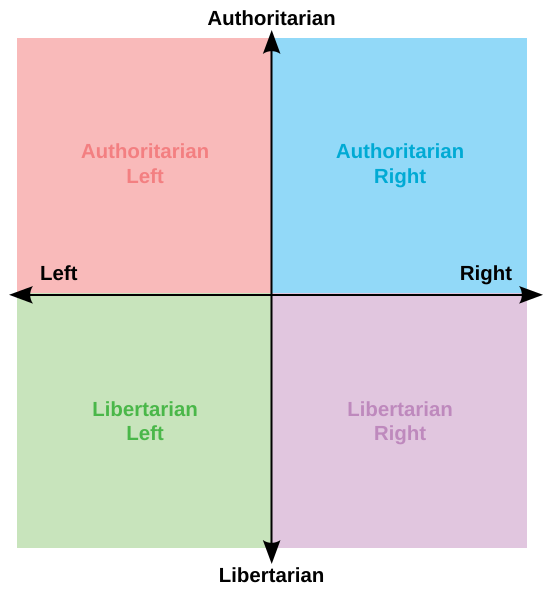
However, the Libertarian ideas are far superior to anything either the authoritarian right (Republicans) or authoritarian left (Democrats) have put forward.  This is why I endorse Gary Johnson for President, despite the oxymoronic nature of this proposal.

For more reading, see:
http://www.thelastbastille.com/2016/01/24/the-state-is-not-great-how-government-poisons-everything/ - Quick read
https://mises.org/system/tdf/For%20a%20New%20Liberty%20The%20Libertarian%20Manifesto_3.pdf?file=1&type=document - Not quick read

Tuesday, June 14, 2016

A Brief Overview of the Past Seventy Years of U.S. History

George Friedman posted an article on the foreign policy stances and options for both Trump and Hillary.  But it is his brief overview of recent U.S. history that I found most curious.

He says:

A Series of Aftermaths: War Ends, Soviets Fold, Towers Fall

The US emerged from World War II having learned two lessons. The first was Pearl Harbor. It taught that an enemy can strike at any time without warning.
The second was the price of delay. Had the US entered the war earlier and opposed Hitler before the Munich Agreement, much suffering could have been avoided.
Global involvement would be the first line of defense. Cheyenne Mountain, home of the North American Defense Command, would be the ever watchful second line. It made sense yet was exhausting.
During the Cold War, this approach seemed right because the Soviet Union had to be blocked on the ground. It had to be deterred from nuclear war as well. The Soviet Union fell, but the military and economic structures the US had created remained.
The United States intervened in Somalia, Haiti, Kuwait, and Bosnia in the 1990s. The Soviets were gone, but the US still saw itself as the global guarantor of security.
Then 9/11 happened, and the classic American fear was made real. It was an attack out of nowhere. As the US awaited more attacks, it went on the offensive in the Islamic world. It built a coalition that has fought wars for 15 years.
 This is the most compact and informed view of recent U.S. history that I have seen.  This helps us to understand where we have been, where we are, where we are going, and why the U.S. behaves like it does many times.

Friday, June 10, 2016

Doug Casey on Facism in America

Doug Casey has a new article which is surprisingly balanced for him from an optimism standpoint.  All of the reasons that he lists for both optimism and pessimism are well-founded according to everything that I have read and he lists his basic recommendations which I am in the process of executing, despite my somewhat limited resources.

It is well worth a read:
http://www.internationalman.com/articles/how-fascism-comes-to-america

I have it copied below for brevity and long term storage.

Tuesday, May 31, 2016

Designer Babies will be a Reality Soon

With the coming Biotech Age of humanity of which we are standing on the cusp of, the philosophical question of genetic modification of humans is suddenly a real question.  I am going to throw my two cents into the debate.  Patrick Cox has a fascinating article that raises scientific philosophical concerns.

I like the idea of genetic modification in humans, at least conceptually.

What, you say!?  Aren't you a devout Christian? 

Well, yes, I am, and there is nothing in the Bible about genetic modification, as much as I cannot find anything related to transgenderism either.  So, my judgments will be based on a scientifically informed Judeo-Christian viewpoint.

My first observation is that generational genetic changes are random.  Randomness is both good and bad, obviously.  Randomness is the source of creativity, among other intrinsically human things.  Designer babies mean limiting randomness to what we define as 'positive.'  Therein lies the rub.  What is actually positive both now and going into the future?  I am against genetically modified organism (GMO) food, because I believe it is having barely attributable, but distinct differences in our collective health, not all of which are positive.  I do not doubt humans view of what are 'positive' biological traits now, I doubt whether we will have the foresight as a species to avoid very decidedly bad aftereffects in the future.  Humans as a race are notoriously bad at predicting the future.  I am often no better --although I am often vindicated as time moves forward, sometimes to my great dismay-- but when you are dealing with revolutionary, civilization age-defining technologies a little self-doubt is a very healthy thing.

So, where is the balance?

Human genetics is random.

I think that pursuing genetic modifications to eliminate the decidedly negative things in genetics that we can see and know with fairly good certainty ahead of time is good.  Curing genetic diseases that cause death, good.  Preventing conditions that retard, incapacitate or otherwise, probably good.  Pursue an individual risk vs reward analysis.

Will this genetic disease kill this baby if left unaltered?  Yes?  Then fix it.
Will this genetic disease leave a baby retard or paralyzed?  If yes, then fix it.

Because even if we screw up their genetics in some initially imperceptible but hugely significant way, they were going to die or be physically or mentally retarded anyway, so the alternative was probably worse.
That is akin to trying to improve the average randomness like this.

You start small.  Watch these kids grow up, become productive adults.  Make sure we did not make some catastrophic error in genetics.  Wait 10-15 years and then try something more extreme.

Will this genetic modification make this person more resistant to common diseases? Yes?  Then do it.
 So, wait 10 to 15 years and see if these more extreme modifications don't result in any long term catastrophic consequences for these individuals.

By the time we have been doing genetic engineering of humans for fifteen years, hopefully fringe cases will pop up and the science will be fixed and tweaked to alleviate these cases before we engage in trying to actually positively modify our genetics.

So my thought is this.  Let's avoid the genetic enhancements and focus exclusively on curing diseases.  From that foundation we can begin enhancements that focus exclusively on reducing disease chances in the future.

If you start on enhancements and designer babies, you risk doing something very adverse inadvertently.  We want to take this genetic modifications thing slow to avoid the Asgard problem.

Jumping straight to designer babies is as likely to result in,
than in anything immensely positive to the human race as a whole.  Just ask the U.S. Federal Reserve about trying to control market prices...

So, caution is always good.  The only way to eat an elephant is one bite at a time.